 One Act of Mercy Global
- October 7, 2026
 One Act of Mercy Global
Recovery from addiction involves more than addressing alcohol or drug use.
For someone working towards recovery, rebuilding a healthier life can involve counselling, medical care, rehabilitation, supportive relationships, healthy routines and attention to physical wellbeing.
Food matters too.
When someone has experienced prolonged substance use, unstable routines or poor eating patterns, access to nourishing food can become an important part of their broader recovery journey.
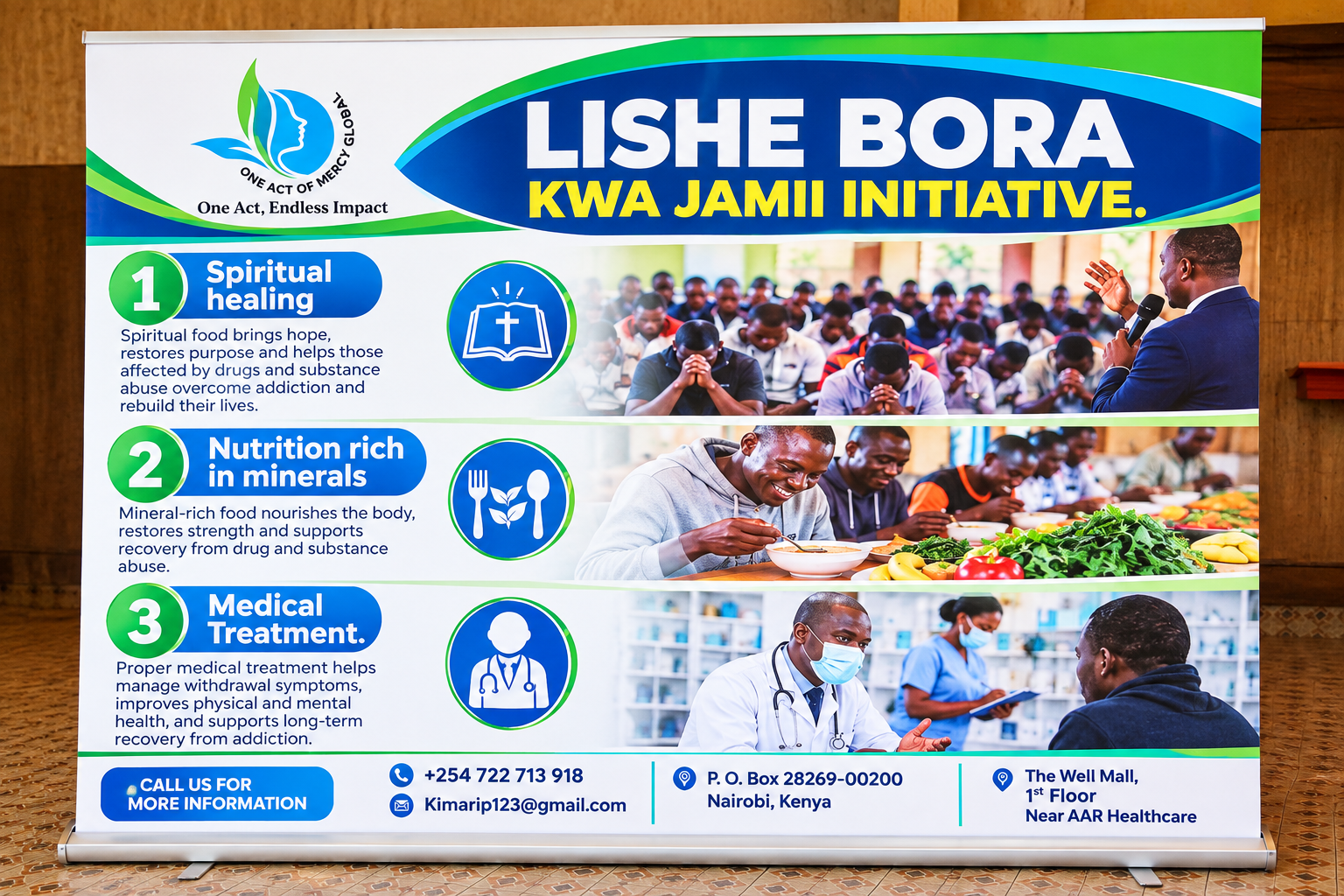
This is the thinking behind Lishe Bora Kwa Jamii, a programme under the One Act of Mercy Counselling Clinic that provides nutritional support to registered people recovering from alcoholism and addiction.
The programme is built around a simple but important idea:
Supporting recovery means supporting the person—not just addressing the addiction.
What Is Lishe Bora Kwa Jamii?
Lishe Bora Kwa Jamii Initiative is a nutritional support programme under the One Act of Mercy Counselling Clinic.
It supports registered people recovering from alcoholism and addiction by helping provide meals and porridge during their recovery journey.
The programme purchases cereals and other ingredients used to prepare food for registered recoverees.
These include:
- Noe
- Njahi
- Mbaazi
- Thoroko
- Chickpeas
- Gituru
- Maize
Meals are prepared and made available for registered recoverees to collect at designated locations.
The programme also prepares porridge using ingredients including:
- Millet
- Sorghum
- Fish flour
- Groundnuts
Lishe Bora Kwa Jamii is therefore not simply about giving out food.
It is about adding nutritional support to a wider recovery journey.
Why Does Nutrition Matter During Addiction Recovery?
Addiction can affect many areas of a person’s life, including daily routines and eating patterns.
A person experiencing addiction may struggle with regular meals or maintaining healthy habits.
During recovery, rebuilding those routines can be important.
Nutritious food can support general physical wellbeing while the person receives other forms of professional and social support.
However, it is important to understand what nutrition can—and cannot—do.
Food does not replace addiction counselling, medical treatment or rehabilitation.
Instead, nutritional support can complement these forms of care.
Recovery is often stronger when the different needs of the person are considered together.
Recovery Involves the Whole Person
Imagine someone who is trying to overcome addiction but is also dealing with:
- Poor eating habits
- Physical weakness
- Emotional difficulties
- Family conflict
- Financial challenges
- Social isolation
- Difficulty maintaining daily routines
Addressing only one of these issues may not be enough.
That is why recovery support can involve several areas.
Counselling
Helps a person explore emotional, psychological and behavioural challenges.
Medical Care
Addresses appropriate physical and mental-health needs.
Rehabilitation
Can provide a structured environment for people who require a higher level of support.
Nutrition
Supports physical wellbeing and healthier daily routines.
Family and Community Support
Can help a person maintain connection and encouragement while rebuilding their life.
These forms of support can work alongside one another.
What Does Lishe Bora Kwa Jamii Provide?
The programme’s nutritional support includes prepared meals and porridge for registered recoverees.
The cereals used for meals include a range of foods such as:
Noe, njahi, mbaazi, thoroko, chickpeas, gituru and maize.
The porridge is prepared using:
millet, sorghum, fish flour and groundnuts.
The intention is to provide food that contributes to the nutritional needs of people going through recovery.
The programme does not present food as a cure for addiction.
Rather, it recognises that a person recovering from addiction still needs care for their physical wellbeing while addressing the psychological, behavioural and social dimensions of recovery.
Three Areas of Support Behind Recovery
Lishe Bora Kwa Jamii is part of a broader understanding of recovery that brings different forms of support together.
1. Spiritual Healing
For some people, spirituality and faith can provide hope, purpose, encouragement and a sense of connection during recovery.
Lishe Bora Kwa Jamii’s programme messaging recognises spiritual nourishment as one part of helping people affected by drugs and substances rebuild their lives.
Spiritual support does not replace professional treatment, but it can be meaningful to individuals whose recovery is connected to their faith or sense of purpose.
2. Nutrition Rich in Minerals
Food provides the nutrients the body needs to maintain health and function.
For people rebuilding their lives after problematic substance use, access to nourishing meals can help support healthier routines and physical wellbeing.
This is where Lishe Bora Kwa Jamii focuses its practical contribution.
By helping provide meals and porridge, the programme gives registered recoverees access to nutritional support while they continue their recovery journey.
3. Medical Treatment
Some people recovering from addiction require medical care.
Depending on the substance involved and the person’s circumstances, withdrawal and other health concerns can require professional assessment and treatment.
Medical care can therefore form an important part of a comprehensive recovery approach.
Lishe Bora Kwa Jamii does not replace medical treatment.
Instead, nutritional support sits alongside the professional care that an individual may require.
Why Food Support Can Make a Difference
Food may seem like a simple form of assistance.
But when someone is going through a difficult recovery journey, practical support can matter.
Imagine having to focus on counselling and recovery while also worrying about where your next meal will come from.
For someone already dealing with addiction-related challenges, additional pressure can make an already difficult situation harder.
Providing food support helps address one practical need while the individual focuses on other aspects of recovery.
This is one reason the Lishe Bora Kwa Jamii Initiative seeks support from donors and well-wishers who want to contribute towards keeping the programme running.
Who Does Lishe Bora Kwa Jamii Support?
The programme supports registered people recovering from alcoholism and addiction.
This distinction is important.
Lishe Bora Kwa Jamii is not a general food-distribution programme for everyone.
Its nutritional support is connected specifically to the recovery work of the One Act of Mercy Counselling Clinic.
This allows the programme to complement the Clinic’s broader addiction-related services.
How Does Lishe Bora Kwa Jamii Work?
The programme follows a practical process.
Step 1: Registration
People supported through the programme are registered recoverees.
Step 2: Food Procurement
The programme purchases cereals and ingredients required for preparing meals and porridge.
Step 3: Food Preparation
Meals and porridge are prepared using the available ingredients.
Step 4: Collection
Registered recoverees collect prepared food at designated locations.
Step 5: Continued Recovery
The nutritional support forms part of the person’s wider recovery journey, alongside appropriate counselling and other support.
This approach keeps the initiative focused on a specific group while addressing a practical need.
Nutrition Is One Piece of the Recovery Journey
It is important not to think about addiction recovery as having one single solution.
There is no universal recovery plan that works exactly the same way for everyone.
One person may require intensive rehabilitation.
Another may benefit from counselling and structured community support.
Someone else may require medical treatment alongside addiction counselling.
Another person may need family counselling to address relationship problems created by addiction.
And throughout these different journeys, practical needs such as food and nutrition can still matter.
Recovery is about the person as a whole.
How Counselling and Nutrition Complement Each Other
Consider two different needs.
A person may need to understand:
“Why do I keep returning to alcohol?”
That is a question counselling can help explore.
They may also need:
“How can I maintain healthier routines while I recover?”
That can involve practical support, including access to nutritious food.
The two needs are different—but both can matter.
This is why the Lishe Bora Kwa Jamii Initiative operates under the One Act of Mercy Counselling Clinic rather than existing separately from the Clinic’s recovery-focused work.
Why Support From Donors Matters
Programmes like Lishe Bora Kwa Jamii require resources to continue.
Food must be purchased.
Ingredients must be prepared.
Meals must be made available to the registered people the programme supports.
For donors and well-wishers, supporting the initiative therefore means contributing to something tangible.
A donation can help the programme continue providing nutritional support to people who are working towards recovery.
The appeal is not simply:
“Give us money.”
It is:
“Help us keep practical nutritional support available to people rebuilding their lives.”
What Can Your Support Help Provide?
Support for Lishe Bora Kwa Jamii can contribute towards the food and ingredients required to keep the programme operating.
This includes cereals and ingredients used to prepare meals and porridge for registered recoverees.
The exact needs can change depending on the programme’s current requirements.
For organisations, businesses, churches, community groups and individuals, this also creates opportunities to contribute in different ways.
You may choose to:
- Make a financial donation.
- Sponsor food purchases.
- Support a specific food requirement.
- Partner with the initiative.
- Help raise awareness.
- Encourage others to contribute.
Every form of responsible support can help sustain the programme.
Why Community Support Matters in Addiction Recovery
Addiction affects more than the individual.
Families experience its consequences.
Communities experience its consequences.
Employers, schools, churches and social networks can also be affected.
That means recovery cannot always be viewed as an individual responsibility alone.
Professional treatment remains essential, but communities can also contribute by creating environments where people are encouraged to seek help rather than being defined by stigma.
Practical programmes such as Lishe Bora Kwa Jamii can form part of that community response.
They demonstrate that recovery support can involve both professional services and practical acts of care.
Moving Beyond Stigma
A person recovering from addiction may already be carrying shame, rejection or judgement.
When society describes someone only by their addiction, it becomes harder to see the person behind the problem.
Recovery requires a different perspective.
The person may have made harmful choices.
There may have been serious consequences.
There may still be difficult work ahead.
But they are also a person capable of change.
Providing food support does not excuse harmful behaviour.
It simply recognises that people going through recovery still deserve dignity, care and an opportunity to rebuild.
How You Can Support Lishe Bora Kwa Jamii
If you would like to support the initiative, there are several ways you can get involved.
Donate
Financial contributions can help support the purchase of food and ingredients needed by the programme.
Partner
Businesses, organisations, churches and other groups can explore partnership opportunities with One Act of Mercy Global.
Spread Awareness
Sharing information about the initiative can help more people understand the relationship between practical support and addiction recovery.
Volunteer
People who want to contribute their time and skills can explore volunteer opportunities with One Act of Mercy Global.
Start a Conversation
Sometimes support begins with simply helping someone understand that recovery is possible and that professional help is available.
Frequently Asked Questions
What is Lishe Bora Kwa Jamii?
Lishe Bora Kwa Jamii is a programme under the One Act of Mercy Counselling Clinic that provides nutritional support to registered people recovering from alcoholism and addiction.
Who benefits from Lishe Bora Kwa Jamii?
The programme supports registered people recovering from alcoholism and addiction.
What food does Lishe Bora Kwa Jamii provide?
The programme purchases cereals including Noe, njahi, mbaazi, thoroko, chickpeas, gituru and maize. It also prepares porridge using millet, sorghum, fish flour and groundnuts.
Does food cure addiction?
No. Nutrition does not cure addiction. Food support is intended to complement professional counselling, medical treatment, rehabilitation and other appropriate recovery support.
Why is nutrition important during addiction recovery?
Access to nourishing food can support physical wellbeing and healthier routines while someone is working through recovery. Its role should be understood as part of broader recovery support.
Can I donate to Lishe Bora Kwa Jamii?
Yes. One Act of Mercy Global welcomes support from donors and well-wishers who want to help keep the initiative running.
Can organisations partner with Lishe Bora Kwa Jamii?
Organisations, businesses, churches and other groups can contact One Act of Mercy Global to discuss appropriate partnership opportunities.
How is Lishe Bora connected to One Act of Mercy Global?
Lishe Bora Kwa Jamii operates as a programme under the One Act of Mercy Counselling Clinic, which provides professional counselling, mental-health and addiction-related services.
Support Recovery Through Practical Care
Addiction recovery involves difficult work.
Counselling may be needed.
Medical support may be needed.
Rehabilitation may be needed.
Family support may be needed.
And sometimes, something as practical as having access to a nourishing meal can also matter.
Lishe Bora Kwa Jamii exists to provide that practical nutritional support to registered people recovering from alcoholism and addiction.
Through the programme, One Act of Mercy Global seeks to support people not only as they address addiction, but as they work towards rebuilding healthier lives.
Help Keep Lishe Bora Kwa Jamii Going
Support nutritional care for registered recoverees on their journey towards recovery.
[Support Lishe Bora Kwa Jamii →]
About One Act of Mercy Global
One Act of Mercy Global provides professional counselling, mental-health and addiction-related services to individuals, families and communities.
Through the One Act of Mercy Counselling Clinic, the organisation provides services including mental health awareness, psycho-social education, individual counselling, couples counselling, family counselling, drug assessment and testing, addiction counselling and group therapy.
The Clinic also provides counselling across different life stages, including adolescents and young adults, adults, older adults and people experiencing perinatal mental-health challenges.
Lishe Bora Kwa Jamii Initiative is one of the programmes operating under the Clinic.
One Act, Endless Impact.